Team building in Barcelona: a guide without the hype
If you have been “tasked” with organising team building in Barcelona, you probably have little time, a limited budget and a team with very different tastes. You are not looking for motivational slogans; you want something that works: getting people out of the office, having a good time and, along the way, improving how you work together.
Here you can book a team-building session in Barcelona and choose group activities in Barcelona without spending hours comparing options or falling back on the typical outing that nobody remembers a month later.
What a day of team building in Barcelona can really change
Think of your team on an ordinary Monday: emails, rushing around and back-to-back meetings. Now imagine the same group trying to finish a challenge inspired by Alice in Wonderland in time. There is a clock, hidden clues, mistakes, laughter and a little pressure.
Good team building does not “fix” every problem, but it can:
- Break down the distance between people who hardly ever speak to one another.
- Reveal skills you do not see in the office (who coordinates, who calms others down, who brings ideas).
- Ease accumulated tension after many changes or busy periods at work.
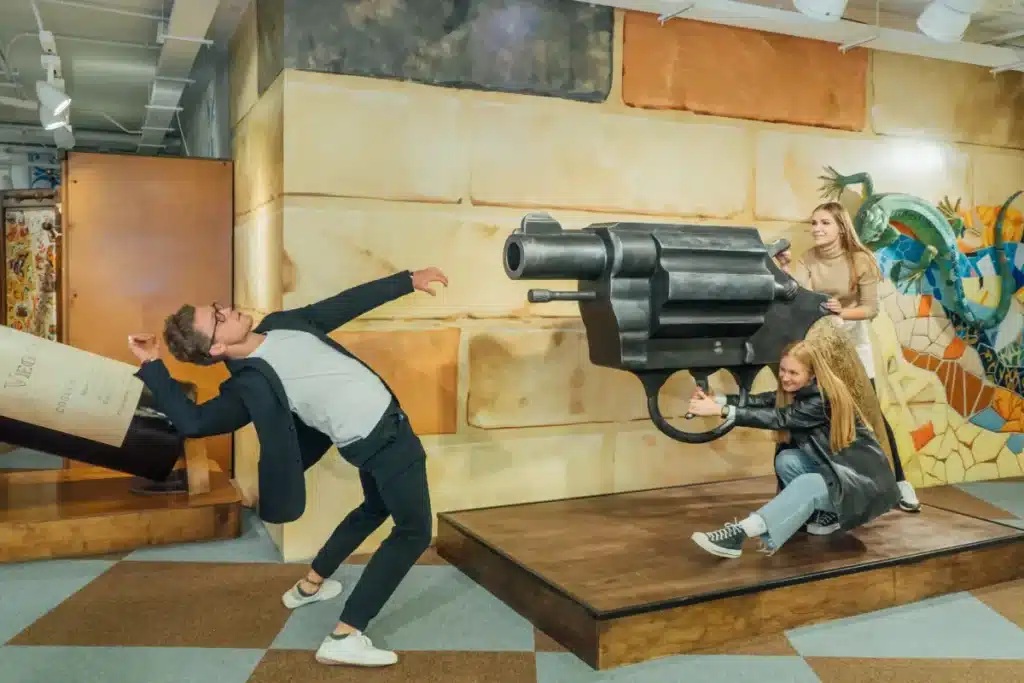
In immersive experiences such as the Alice Through the Looking Glass room at Big Fun Museum, the team has to collaborate for real: divide tasks, listen and decide quickly. There are no PowerPoints, just a very clear shared goal: getting out in time.
Back in the office, small but important things emerge: inside jokes, more confidence asking for help and less sensitivity about mistakes. That is what makes certain team-building activities in Barcelona worth the investment, rather than “just another outing”.
Group activity ideas in Barcelona for your type of team
Before booking anything, think about what your group is like. A young startup team is different from a department with people of different ages and working rhythms. The group activities in Barcelona that work best are those suited to the reality of your company, rather than the most eye-catching catalogue.
Some real examples:
- A small team (8–12 people), close-knit but tired:
A themed escape room, a simple meal afterwards and time to talk about how it went informally. The focus is on switching off and laughing together. - A large team (30–50 people) who hardly know one another:
An urban treasure hunt through central Barcelona, with challenges in rotating teams. This mixes people from different departments so nobody stays “stuck” with their usual group. - A hybrid team with remote workers:
A morning of cooperative games in person and a more relaxed afternoon in the city, leaving space to discuss topics that do not come up on video calls. These group activities in Barcelona really help put faces and context to people who only see each other on screen.
Over time, you can create your own internal “catalogue” of Barcelona experiences you know work, repeating the best each year and mixing formats so it does not feel like a copy-and-paste exercise.
How to choose corporate activities in Barcelona without getting overwhelmed
When browsing options, everything sounds good… until you have to make a specific decision. To make it practical, use a very simple set of criteria for corporate activities in Barcelona:
- A clear objective
Write it in one sentence:
“We want people to get to know each other better”,
“We want to celebrate a good year”,
“We want to rebuild the team after changes”.
Without an objective, the activity becomes little more than “a day out”. - A realistic duration
Usually, 2–3 hours of activity is enough. For example, an escape room plus some time for informal discussion. If you try to fit in too much, people end up exhausted. - The right level of pressure
Some teams enjoy competitive challenges and rankings, while others struggle if they feel they are “losing”. When exploring corporate activities in Barcelona, check whether the tone is more cooperative or highly competitive. - Accessibility and logistics
The venue should be easy to reach by public transport, the timing should be manageable (many companies choose Thursdays from 16:00 to 19:00), and there should be no physical requirements that exclude anyone. - Plan what happens afterwards
You do not need a formal workshop. Sometimes it is enough to set aside 15 minutes the next day to discuss what worked well as a team and what could be brought into everyday work.
Using these five points as a filter makes it much easier to compare team-building activities in Barcelona without getting lost in secondary details.
How to fit the sweet museum into your team-building plan
If you are considering a specific option such as the sweet museum, it is best to think about how it fits into the whole day, rather than treating it as a “standalone activity”.
A possible schedule for a team of around 10–20 people:
- Arrival and a brief welcome (10–15 min).
- An explanation of the game and division into groups.
- The main game (between 60 and 90 min, depending on the format).
- A group photo and an informal finish.
- Optional: a nearby meal or snacks to extend the conversation.
The interesting thing about this experience is observing how the team behaves as time runs out: who suggests ideas, who listens, who takes the initiative. As the organiser, you can use this to identify dynamics you can discuss calmly afterwards.
In many cases, this kind of team building in Barcelona works well as the “highlight” of a broader company day, combined with a short meeting about goals or other lighter activities. If it goes well, it is very likely to join your list of Barcelona experiences to repeat or recommend to new teams.
How many people are ideal for team building in Barcelona?
It depends on the format, but many games work especially well with between 8 and 20 people, divided into small groups. For larger groups, you can run several sessions or use activities designed to scale up, such as treasure hunts or challenges at different stations.
Do you need to mix people from different departments?
It is not essential, but it usually helps. Mixing people who do not normally work together reduces the feeling of “silos” and can improve later collaboration. A common strategy is to combine people from different areas and levels (junior, senior, coordinators) in each group so everyone sees one another in a different context.
What if some team members do not want to do these activities?
Some initial resistance is quite common. It helps to explain the real objective (improving how people work together, rather than “forcing them to be friends”) and choose activities where nobody feels embarrassed or exposed. You can also allow some people to take a more observational role without pushing them too far.


